
EU funded research project, 2007-2010
TRENDS
🚀 Project Objectives
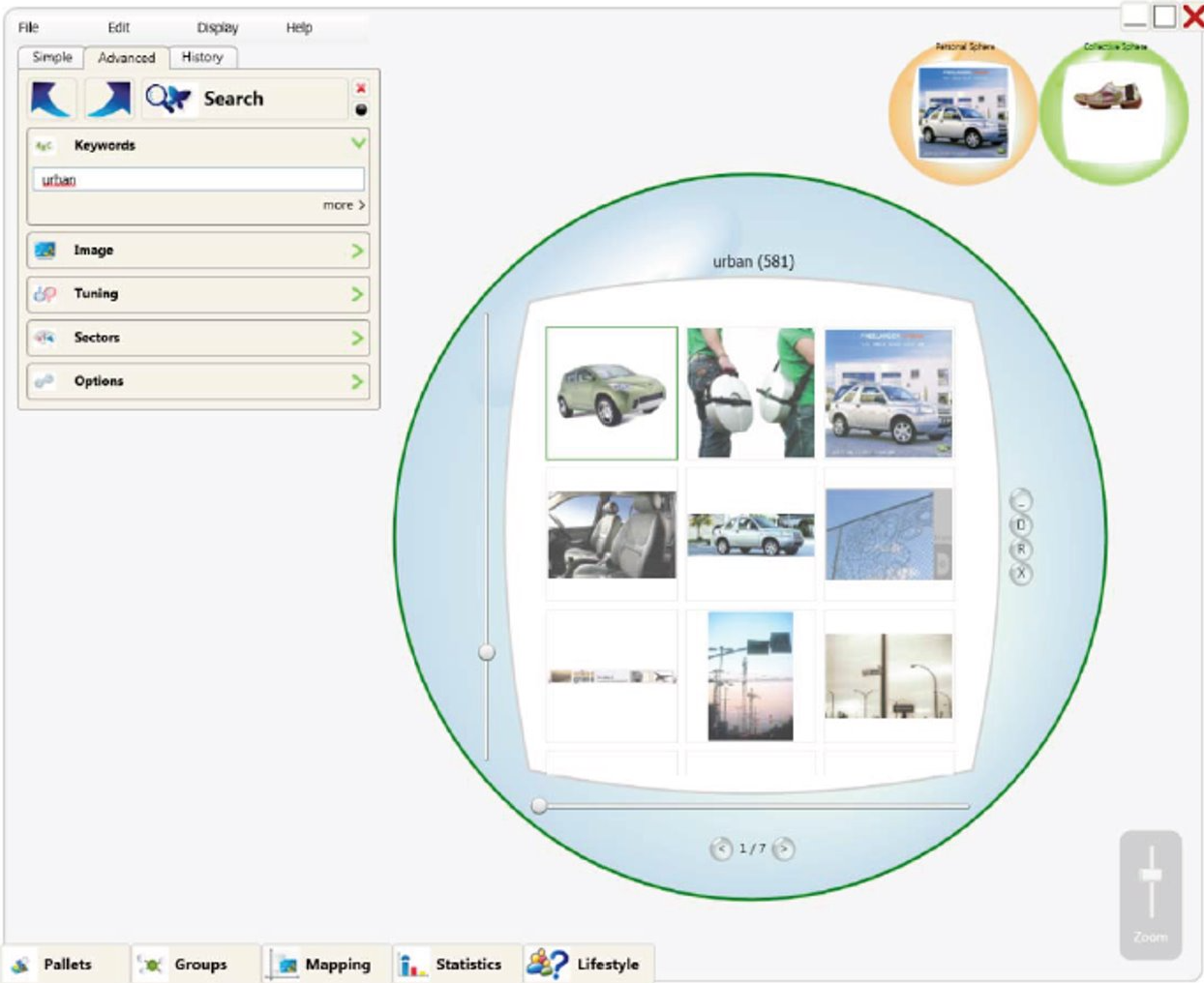
TRENDS was a large-scale European initiative designed to enhance the inspiration-seeking phase of automotive design through advanced image retrieval technologies. The project brought together a diverse consortium of technical and non-technical partners, culminating in a functional proof-of-concept system that included text- and image-based search engines, curated databases, and a user-facing interface tailored to design workflows.
🛠️ What I Did
As technical coordinator and deputy project manager, I served as the bridge between design teams and technology developers. My role focused on translating nuanced user needs into actionable specifications for partners building the retrieval engines. I also led the evaluation strategy, integrating both user-centric and technical performance metrics to assess system viability. Alongside coordination, I developed custom routines to support system integration, testing, and iterative refinement across teams.
🎓 What I Learned
I gained hands-on experience managing complex, multi-partner scientific projects—balancing divergent priorities while maintaining a shared vision. I deepened my understanding of information-seeking behavior in creative contexts and learned how to align technical innovation with real-world design workflows.
🔮 What It Would Look Like in 2025
If reimagined today, TRENDS would be powered by generative AI—transforming the image retrieval paradigm from searching to co-creating. Instead of querying static databases, designers could interact with multimodal models that generate bespoke visual concepts from natural language prompts, mood boards, or even sketches. Generative image tools would allow for iterative refinement, enabling designers to explore aesthetic directions dynamically, without being constrained by existing datasets.
The system could integrate semantic intent modeling, style transfer, and real-time feedback loops, making the inspiration phase radically more fluid and personalized. Evaluation metrics would evolve too—shifting from precision and recall to creative relevance, emotional resonance, and design adaptability. In short, the 2025 version of TRENDS wouldn’t just retrieve—it would imagine alongside the user.